KATHMANDU, Nepal — The death toll from catastrophic flash floods and landslides in Nepal has risen sharply, as rescuers race to find hundreds of people still missing and reach communities cut off by destroyed roads and bridges.
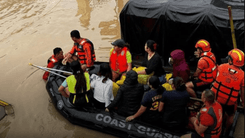
Nepalese authorities said hundreds have been killed since Wednesday’s disaster, with more than 2,400 people still unaccounted for. Officials said more than 4,400 people have been rescued, including nearly 200 foreign nationals.
The flooding was triggered by a massive collapse of ice, rock and debris in the Himalayan region, sending torrents through mountain valleys and along the Trishuli River.
Nepal Foreign Minister Shisir Khanal said saving lives and finding missing people remained the government’s top priority.
“Our immediate priority remains clear — to save lives, locate missing persons, rescue them, provide urgent relief to survivors, and ensure that affected Nepali as well as foreign nationals receive appropriate assistance and support,” Khanal said.
He said authorities had recovered 626 bodies and that about 2,400 people remained unaccounted for at the time of his briefing.
Desperate search for workers
One of the most difficult rescue operations is underway at several hydropower projects along the Trishuli River, where more than 900 workers are believed to be missing.
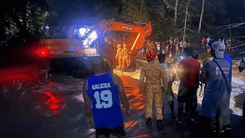
Emergency crews have been trying to reach workers who may be trapped inside tunnels after floodwaters and debris destroyed access routes.
Finance Minister Swarnim Wagle said rescuers were making a major effort to reach the Upper Trishuli 3A hydropower project, where people could still be alive.
“Hoping against odds that dozens of people trapped in hydropower projects might still be rescued,” Wagle said.
He said crews were searching for an entrance into the tunnel and were also looking at the Trishuli 3B and Upper Trishuli 1 projects.
“There are reports that there are some people who might still be stranded in the jungles near the border,” Wagle said, adding that rescuers would also search those areas.
India, China send specialist help
Nepal has requested specialized assistance from neighboring India and China, including technology to detect survivors trapped beneath debris and equipment for tunnel rescues.
Khanal said an 11-member technical reconnaissance team specializing in tunnel rescue had been mobilized from India, while a Chinese tunnel rescue team was expected to arrive soon.
The government is also seeking assistance with forensic and DNA identification, as well as additional mortuary facilities to cope with the number of recovered bodies.
“We have requested specific and specialized assistance from our friendly neighbours where such support can further strengthen our search-and-rescue efforts,” Khanal said.
Villages cut off
The destruction of bridges and roads has severely complicated relief operations.
Wagle said 19 major bridges had been swept away, leaving villages isolated on the opposite banks of the river.
“We have now accelerated the pace of distribution of relief materials because so many villages are disconnected,” he said.
He said authorities had received reports that food supplies were running out in some isolated communities, including areas where women and children were stranded.
Helicopters are being used to reach some of the hardest-hit areas, while rescue teams continue to move through muddy, debris-filled valleys.
Risk of further flooding
The disaster has also raised concerns about secondary flooding after landslides created a barrier lake near the Nepal-China border.
Chinese authorities had warned that the lake could overflow, prompting rescue personnel to withdraw to safer areas. Nepalese officials also temporarily suspended some rescue operations after water levels rose in the region.
The disaster has affected both sides of the Himalayan border. Chinese authorities have reported deaths and hundreds of people missing in Tibet, while foreign nationals are among those unaccounted for.
The scale of the destruction has left entire communities buried under mud and debris, with roads, bridges, buildings and hydropower infrastructure badly damaged.
For rescuers, the immediate challenge is reaching those who may still be alive — particularly workers believed to be trapped underground — before worsening conditions and the continuing threat of flooding make the search even more difficult.