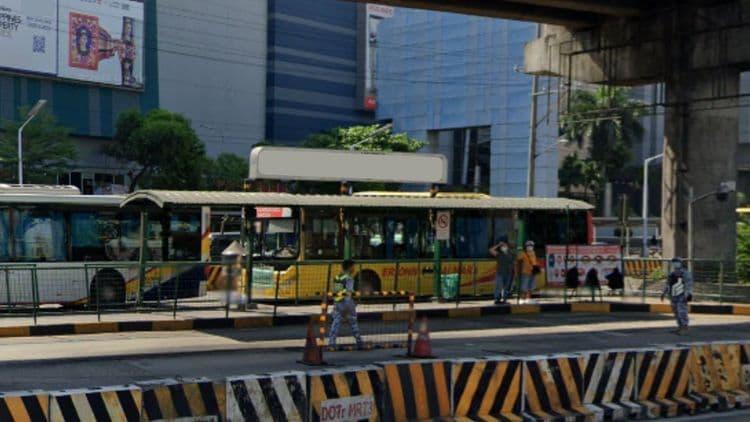
MANILA, Philippines — The Management Association of the Philippines (MAP) has opposed proposals to allow private vehicles to use the EDSA Busway, warning against measures that could undermine the dedicated public transport system.
In a statement issued Tuesday, November 3, MAP maintained that accommodating students was not sufficient justification for granting private vehicles access to the exclusive bus lane.
Instead of opening the Busway to private cars, the business organization urged the government to increase the number of buses operating along the corridor, citing a decline in available units due to what it described as inadequate government support.
MAP also called for shorter intervals between buses and the construction of additional stations to improve accessibility and encourage more commuters to use the system.
Among the locations identified as needing bus stations are Roosevelt, Cubao, Rockwell, Ayala, Magallanes, Malibay, and the stretch from Pasay to the Parañaque Integrated Terminal Exchange (PITX).
The organization also appealed to Congress to restore funding for the EDSA Busway System in the proposed 2027 national budget.
“We call on the House and the Senate to restore the 2027 budget for the EDSA Busway System,” MAP said.
Over 341 million passengers served
Citing ridership figures, MAP emphasized the importance of the Busway in moving large numbers of commuters along Metro Manila’s busiest thoroughfare.
According to the organization, the EDSA Busway recorded a cumulative 341,307,847 passenger trips from the start of its operations on June 1, 2020, through December 2025.
Its highest single-day ridership reached 454,649 passengers on December 27, 2023.
The figures, MAP said, underscore the importance of maintaining a dedicated transport corridor capable of accommodating high passenger volumes.
Conditional exemptions proposed
While opposing unrestricted access for private vehicles, MAP expressed openness to limited exemptions under strictly regulated conditions.
The organization said carpool vehicles carrying at least four passengers could be permitted during designated hours corresponding to school schedules, provided authorities could adequately enforce the restrictions.
It also suggested that other high-capacity vehicles, including school buses and point-to-point (P2P) buses, could be considered for access.
However, MAP stressed that the Busway should remain primarily dedicated to regulated public transport vehicles with high passenger capacity.
“Dedicated bus roadway and only regulated buses with high-volume capacity are the design imperatives for the Busway,” the organization said.
Prioritize passengers over vehicles
MAP reiterated that transportation policies should prioritize the efficient movement of people rather than simply accommodating more vehicles on already congested roads.
“The policy should be to move passengers, not vehicles. Private vehicles on the roads should be reduced,” the organization said.
The November 3 statement was signed by MAP President Donald L. Lim and Eduardo H. Yap, chair of MAP’s Transportation and Infrastructure Committee.
Their position reinforces the organization’s call for greater investment in public transportation infrastructure, improved bus availability, and policies that prioritize mass transit over private vehicle access.