KATHMANDU, Nepal — Nepal lost close to 10 percent of its entire economy in a single day last month. Its finance minister says the country did almost nothing to cause it.
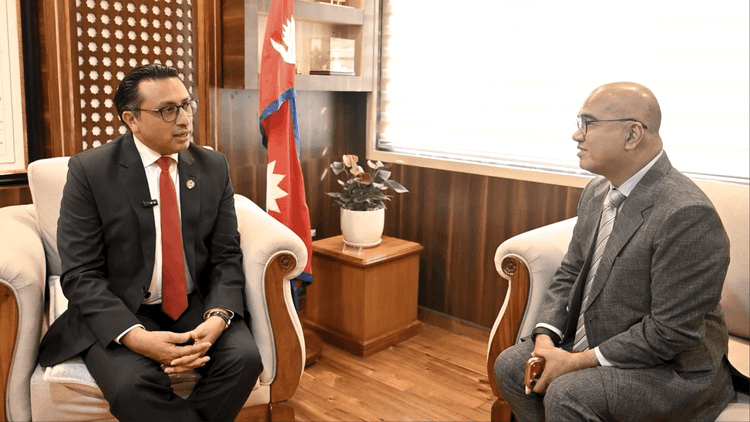
"We are paying the price," Dr. Swarnim Wagle told NET25 in an exclusive interview here.
Nepal accounts for 0.1 percent of the world's greenhouse gas emissions. On August 26, a glacier collapsed at Langtang Lirung and sent a wall of water down the Trishuli valley. It killed 1,342 people. Another 4,886 are still missing. About 1.6 million Nepalis were affected.
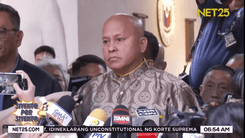
Wagle sat down with NET25 on Thursday, shortly after receiving financial aid from the Iglesia Ni Cristo (Church Of Christ) for Nepal's Prime Minister Disaster Relief Fund. The aid was coursed through the Felix Y. Manalo Foundation, Inc.
He thanked the Church for the contribution.
"In this particular case, we're very grateful to your community for helping us so generously," the minister said.
"Because we are bound by a common humanity, right? We're bound and guided and motivated by compassion. And I think that's the larger message."
"And we're grateful for that. Thank you so much."
Counting what is gone
The minister went down the list.
Thirteen or fourteen hydropower plants. Substations. Transmission lines. All swept away. Thirteen projects were knocked off the grid — 431 megawatts of power, gone.
Schools. Hospitals. Around 8,317 houses destroyed.
Farmlands. Small businesses. Hotels and lodges. Dozens of bridges — concrete and suspension — on the roads climbing to the Chinese border.
"So the cumulative toll runs into a few billions," Wagle said.
Official damage now stands at Rs 387.54 billion, or roughly USD 2.57 billion.
"So for a poor country with a GDP of less than 50 billion dollars, this is approximately 10 percent of our GDP — the damage and losses. So it's a substantial hit to our economy."
And it gets worse if Nepal rebuilds properly.
"Now, if you were to build back better, you know, build for tomorrow, then the costs would obviously amplify even more."
The poor pay first
Wagle said the people who lost the most had the least to begin with.
"Our poor people in these places — tourist guides and shopkeepers and pilgrims and tourist trekkers — have had to pay this price."
"This is a price that an impoverished society like ours is paying. The consequences are all somewhere else."
It is a familiar argument in Manila, in Tacloban, in every barangay that has rebuilt after a bagyo. The countries that burned the carbon are not the ones standing in the mud.
"So this is why we've been saying we need global solidarity. We need shared responsibility and shared burden-sharing."
"Because the consequences are local, but the origins are global."
"And this is where the world has to come together to face a global crisis like this."
What the Philippines can learn
Wagle knows the Philippine story. He said so plainly.
"We are aware that the Philippines also faces natural disasters. We have cyclones and tsunamis, and you are a frequent victim of many of these natural disasters."
His list of lessons is short and hard.
Better early warning systems. Tighter rules on who is allowed to build along riverbanks. Catastrophe insurance, so a poor country is not left holding the bill alone.
And he warned that climate is only half of Nepal's problem. The country sits in a seismic zone. A major earthquake struck 11 years ago.
"So you combine a seismic vulnerability with climate change and, in a very fragile, young mountain range, which is the Himalayas, this calls for a different model of development going forward and how we prepare for it."
But in the end, he said, it came down to people.
The Nepal Army. The police. The Armed Police. The civil service. All of them moving at once, in what he called a whole-of-society approach.
"It's not just the government entity, but the entire society coming together."
A long friendship
Wagle said Nepal and the Philippines go back a long way, and that the Filipino community here is not small.
He asked that a message be carried home to an old classmate in Manila, Professor Ronald Mendoza.
"We studied together. And he's a very distinguished academic in Manila... So you can convey my greetings to him."
Beyond the cheque, Care for Humanity teams distributed relief goods in Bidur and Trishuli Bazar in Nuwakot, one of the five hardest-hit districts. Reaching them meant mountain back roads through Kakani and Thansing, because the bridges and road sections were gone.
As the interview ended, the minister of finance of Nepal again thanked the Iglesia Ni Cristo (Church Of Christ) for the contribution.