Fri, Sep 11Friday, September 11, 2026
NET25 Logo
  • NEWS
  • ENTERTAINMENT
  • OPINION
RADYO AGILAEAGLE FM 95.5
    • News
    • Entertainment
    • Opinion
    • Radyo Agila
    • Eagle FM 95.5
    • Program Schedule
    • About Us
    • Profiles
    • Contact Us
    • Privacy Policy
    • Sales
    • Job Application
  • CONNECT WITH US
NET25 Logo

Your source for news, entertainment, and the best of Philippine broadcasting.

Connect With Us

About

  • About Us
  • Profiles
  • Contact Us
  • Privacy Policy

Contact

  • Contact Sales
  • Job Application

Partners

    © 2026 NET25. All rights reserved.UTC
    EXCLUSIVE
    National News|
    International|
    Provincial|
    Sports|
    Business|
    Entertainment|
    News Programs|
    Public Service|
    Inspiring Stories|
    Bangungot: Buried Alive in NepalInternational
    15 hours ago

    Bangungot: Buried Alive in Nepal

    Read

    It is not the ruins that hit you first. It is your imagination.


    You are standing there on a clear, quiet day. Blue sky. No rain. And your mind starts showing you things it has no right to show you.


    It shows you the mountain moving.


    It shows you being buried alive, right where your feet are planted.


    It shows you being carried away and drowning — not in water, but in mud, with boulders as big as jeepneys rolling on top of you.


    That is what Bidur does to a person. On a beautiful afternoon, under a peaceful sky, it makes you rehearse your own death.


    Mud. Sand. Stones. Protruding metal and steel.


    We at NET25 have covered disasters before. Bagyo. Baha. Landslides. Families crying in front of what used to be a house.


    But watching it come in on a monitor is not the same as standing in it. Nothing prepared me for Bidur.


    The road that was no longer there


    We landed in Kathmandu thinking it would be a simple drive north to Nuwakot.


    It was not.


    Google Maps kept changing its mind, pushing us off the highway and onto small mountain back roads through Kakani and Thansing — narrow, winding, one zigzag after another, like Session Road in Baguio.


    Two extra hours on the road, with rain in some parts.


    Then we learned why. Bridges were down. Whole sections of the main road were destroyed. This was the shortcut.


    And somewhere on that wet mountainside, it finally sank in.


    Parts of the road we were supposed to take did not exist anymore.


    Not blocked. Not damaged. Some were gone — erased, together with everything that once stood beside them.


    Thirty minutes. Three storeys of water.


    Here is what happened.


    On August 26, high up near the Nepal–Tibet border, a chunk of the Langtang Lirung glacier broke off. Ice and rock came roaring down the mountain and emptied into the Trishuli River.


    In thirty minutes, the water rose almost 10 meters.


    Imagine floodwater reaching the roof of a three-storey building — in half an hour. No warning. No time to grab anything. No time to grab anyone.


    By the time that wall of mud reached Bidur, about 100 kilometers downstream, entire towns behind it had already been wiped off the map.


    Where the hotel used to be


    I stood in front of the Yangra.


    It used to be a four-storey hotel. Now it is a broken shell of concrete, tilting toward the river like a man about to fall.


    I tried to do a standup there, to describe what the camera was seeing. But that day the words would not come. Some things refuse to be narrated.


    NET25 Reporter Mar Gabriel did it. Watch his report here.


    Behind me was a building that once held families. Travelers. Workers with jobs and shifts and paydays.


    Now it holds nothing. Just twisted steel and silence.


    “I lost everything”


    The Yangra was not the only one.


    telegram-cloud-document-5-6131749475049283887.jpg


    A short distance away, we met Saru Shrestha, owner of Shrestha Hotel and Lodge — another hotel along the same river, and a well-known one. “A very famous hotel in this area,” our interpreter called it. Everybody in Bidur knew the place.


    Now Shrestha was standing very still, staring at what was left of it.


    “We looked out the window and saw huge waves coming from the river. People were shouting, ‘Run and save yourselves,’” she told us, with Rebika Chhetri of Himalaya TV translating.


    Everybody ran for higher ground.


    “We had seen floods before, but we never imagined that a flood this severe would happen,” she said.


    She kept looking at what was left of her three-storey hotel. Then she said the line I still hear in my head:


    “I lost my land and all my property. I lost everything.”


    Three words. No crying. No drama. Just a woman standing in front of her whole life, turned into rubble. Read more about this story in this link: https://net25.com/news/nepal-lodge-owner-recalls-escape-devastating-flood


    The numbers you cannot feel


    Later, going through the reports, the scale started to look almost unreal.


    At least 1,369 dead across Nepal. More than 5,100 still missing.


    Bidur alone lost 538 homes and three schools. And 311 of its own people are still unaccounted for.


    Numbers are easy to read on a screen. They are very heavy to carry while you are standing in the mud that caused them.


    Life still walking near ruins


    Then I saw something that broke me in a different way.


    Shree Chandrajyoti Secondary School. The gate was still standing. Motorbikes parked outside. Children and parents going in and out.


    But not for lessons. The school has become a relief operations area.


    Any Filipino understands this without being told. Back home, when the water rises, the school is the first place we run to. The classroom becomes a bedroom. The covered court becomes a warehouse. Classes stop so that survival can begin.


    So it was not an ordinary school day. There are no ordinary school days left in Bidur.


    And still, life kept moving. The flood is barely gone and somebody is already sweeping. The roof is missing and somebody is already boiling water. A whole community rearranged around a disaster, and refusing to stand still.


    No shot list can hold that.


    Where the lights died


    Shyam Kadel and his Himalaya TV team brought us to what was left of a hydropower station along the river — one of the plants in the Trishuli corridor. Both stations there were basically destroyed.


    The powerhouse was buried. The switchyard was gone.


    I filmed some shots there, and all I could think about was everything that used to pass through that spot. Lights. Refrigerators. Cellphone chargers. Hospital machines keeping people alive.


    All of it ran through a place that no longer exists.


    The ones doing the actual work


    What I did not expect was how much the recovery itself would move me.


    An excavator operator, patiently scooping mud out of what used to be a store. Soldiers scanning the area. A boy checking what he could pick up from the ruins.


    Those are the images that will stay with me. Not the drone shots of destruction. Them.


    Care for Humanity, on the ground


    This was not an ordinary reporting assignment for me.


    I traveled with a Care for Humanity team — the relief arm of the Iglesia Ni Cristo, which has been bringing aid into disaster zones like this one for years.


    Before we ever pointed a camera at the wreckage, we were there to see the relief operation up close, and to help however we could.


    There is a strange clarity that comes from doing two jobs at once — reporter and volunteer. You stop thinking in shots and soundbites. You start noticing what people actually need. Clean water. Food. Clothes. Someone to stop and ask how they are holding up.


    Watching our team coordinate with local staging points, with thousands of people already working the recovery, gave me a view most journalists never get. We were not just watching the response. We were a small part of it.


    That is why this story feels different to me. It is not only about documenting loss. It is about documenting what people choose to do about it.


    Why I will not forget this


    We covered Ondoy. We covered Yolanda. We sent teams into our own flooded provinces and asked our own kababayan what they lost.


    But this was something else.


    A 72-kilometer wound cut through a river valley — caused by a glacier no one in these communities could have known was about to collapse. It changed the way I think about climate risk.


    Nepal leans on hydropower. Its roads cling to mountains. Its communities sit far from help. All of it was tested at once, by a disaster the government is still struggling to fully measure.


    More than 21,000 soldiers and police are working the recovery. A three-month disaster zone has been declared.


    But the people truly rebuilding Bidur are the school staff who still show up. The family sorting through what is left of their house. The excavator crews swallowing mud and dust, day after day, one truckload at a time.


    I came here to tell their story. I am not sure I did it justice.


    Bangungot means nightmare. The difference is that a nightmare ends when you wake up.


    Bidur cannot wake up. It can only rebuild.


    And it is already trying.


    Editor's note on sourcing and the use of AI:

     
    The reporting in this article was done on the ground by the author. The visit to Bidur, the observations, the video and the interview with hotel owner Saru Shrestha are his own, conducted with Rebika Chhetri of Himalaya TV interpreting from Nepali.
     
    An AI assistant was used to help organize and edit the text, and to cross-check figures, place names and background details against published reports. It was not used to generate quotes, interviews, images or eyewitness accounts. All content was reviewed, verified and approved by the author before publication.
     
    Casualty, damage and displacement figures are as reported by Nepali authorities and news organizations at the time of publication. These numbers are still changing as search and recovery operations continue.
    SMDC, Pag-IBIG Fund partner to bring homeownership closer to more Filipinos
    Business

    SMDC, Pag-IBIG Fund partner to bring homeownership closer to more Filipinos

    17 hours ago
    Next Leg of the Franchise Negosyo Roadshow Heads to Mindanao: "Franchise Negosyo Mindanao" Opens in Cagayan de Oro
    Business

    Next Leg of the Franchise Negosyo Roadshow Heads to Mindanao: "Franchise Negosyo Mindanao" Opens in Cagayan de Oro

    a day ago
    Pag-IBIG, SMDC partner as more developers widen home options under Marcos’ Expanded 4PH
    Business

    Pag-IBIG, SMDC partner as more developers widen home options under Marcos’ Expanded 4PH

    3 days ago
    That old massage chair at home might be worth more than you think: ZION opens trade-in for any brand
    Business

    That old massage chair at home might be worth more than you think: ZION opens trade-in for any brand

    4 days ago
    Starbucks sa Philippine Arena Complex, bagong spot para sa mga biyahero at concert-goers
    Business

    Starbucks sa Philippine Arena Complex, bagong spot para sa mga biyahero at concert-goers

    11 days ago
    Pag-IBIG housing-related assets top ₱1 trillion as more members gain homes
    Exclusive

    Pag-IBIG housing-related assets top ₱1 trillion as more members gain homes

    16 days ago
    News you might have missed
    Pag-IBIG Fund, Avida and Amaia join hands to expand homeownership for Filipino workers
    National News
    8/13 2:45pm

    Rodriguez, Rizal, isinailalim sa State of Calamity; Iglesia ni Cristo, nagpaabot ng tulong sa mga apektadong residente
    Exclusive
    8/13 2:0pm

    Iglesia ni Cristo, nagpaabot ng tulong at namahagi ng relief goods sa mga apektado ng baha sa Biñan, Laguna sa ilalim ng 'Lingap sa Mamamayan'
    Exclusive
    8/13 1:20pm

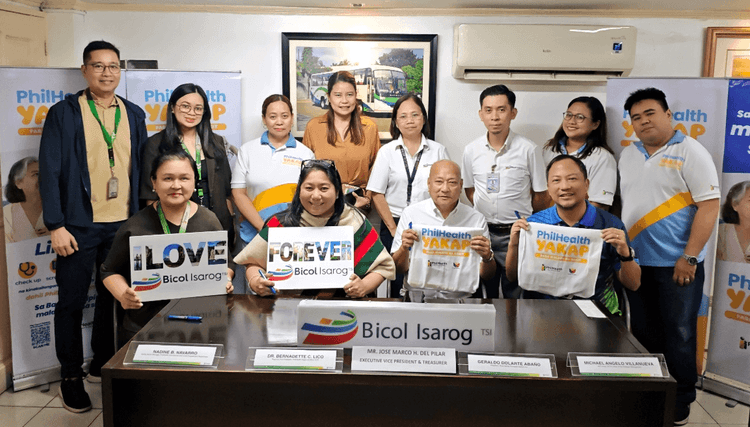
    PhilHealth at CARE, Nag-partner para sa YAKAP Program
    Public Service
    8/12 4:10pm

    MAG, PhilHealth, nagtulungan para mapalawak ang YAKAP access ng mga PDL
    Exclusive
    8/12 4:0pm

    Iglesia Ni Cristo, namahagi ng Lingap sa mga residente sa kabila ng mataas na baha sa Sta. Rosa City, Laguna
    Exclusive
    8/12 11:55am

    Lingap ng Iglesia Ni Cristo, agad naabot ang mga biktima ng baha sa Sta. Rosa City, Laguna
    Exclusive
    8/12 11:40am

    Pag-IBIG Fund net income up 24% to ₱41.35 billion in first half of 2026
    National News
    8/11 10:15pm

    Iglesia Ni Cristo, namahagi ng tulong sa mga biktima ng pagbaha sa Sucat, Parañaque sa pamamagitan ng "Lingap sa Mamamayan"
    Exclusive
    8/11 8:15pm

    Iglesia Ni Cristo, namahagi ng tulong sa mga OFW sa Kumamoto, Japan sa pamamagitan ng "Lingap sa Mamamayan"
    Inspiring Stories
    8/11 7:30pm

    Pag-IBIG Fund, Landers partner to bring more savings on members’ everyday expenses
    Exclusive
    8/9 1:56pm

    Puregold launches Teatro Panalo, opens search for outstanding Filipino plays
    National News
    8/9 1:45pm