
MANILA, Philippines — The Philippines is expected to host a major gathering of Indo-Pacific powers next week, with U.S. President Donald Trump set to meet the leaders of Japan, Australia and India for a summit of the Quadrilateral Security Dialogue, or Quad.
The meeting, expected on Tuesday, November 17, on the sidelines of the ASEAN Summit, would be the first Quad leaders' gathering in two years and the first since Trump returned to the White House.
According to sources familiar with the preparations, discussions are expected to focus on critical minerals, maritime security and protecting international shipping lanes — priorities that reflect growing concerns over supply chain vulnerabilities, energy security and China's expanding influence in the region.
SECURITY AND STRATEGIC INTERESTS
The Quad brings together four major Indo-Pacific powers in a partnership aimed at promoting a free and open region. While its members insist the grouping is not directed against any country, it is widely regarded as a strategic counterweight to China's growing regional influence.
Maritime security is expected to be a key issue in Manila, particularly the need to keep commercial shipping routes open and protect vessels from attacks.
For the Philippines, these discussions carry particular importance. As an archipelagic nation dependent on international maritime trade, Manila has a direct interest in keeping sea lanes safe and uninterrupted.
Critical minerals are also expected on the agenda. These resources are essential to semiconductors, clean energy, advanced manufacturing and defense industries. Cooperation among Quad members could help diversify supply chains and reduce dependence on concentrated sources of supply.
WHAT IT MEANS FOR THE PHILIPPINES
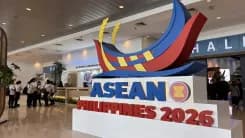
The expected meeting adds a strategic dimension to the Philippines' role as host of the ASEAN Summit. Bringing together ASEAN leaders and the four Quad powers places Manila at the center of important discussions on regional security and economic cooperation.
But it also highlights the diplomatic balancing act facing Southeast Asia as U.S.-China competition intensifies.
ASEAN has sought to preserve its central role in regional affairs while maintaining engagement with both Washington and Beijing. The Quad offers a separate platform for four major powers to coordinate on shared security and economic priorities.
Whether the Manila meeting produces concrete commitments remains to be seen. But its timing underscores how maritime security, access to strategic resources and geopolitical competition are increasingly shaping the Indo-Pacific agenda.