A powerful magnitude 7.7 earthquake struck southern Panama on Friday, October 9, shaking buildings, sending thousands of people into the streets and damaging structures, but the country appeared to have avoided widespread destruction and immediate reports of deaths or injuries.
According to the United States Geological Survey (USGS), the earthquake struck at a depth of about 12.6 kilometers, with its epicenter in a sparsely populated area roughly 200 kilometers from Panama City.
More than 40 aftershocks were recorded in the hours following the main tremor, raising concerns among residents as authorities assessed the damage.
Despite the powerful shaking, the Panama Canal and the Cobre Panama copper mine reported normal operations. Tocumen International Airport also resumed flights after temporarily suspending operations.
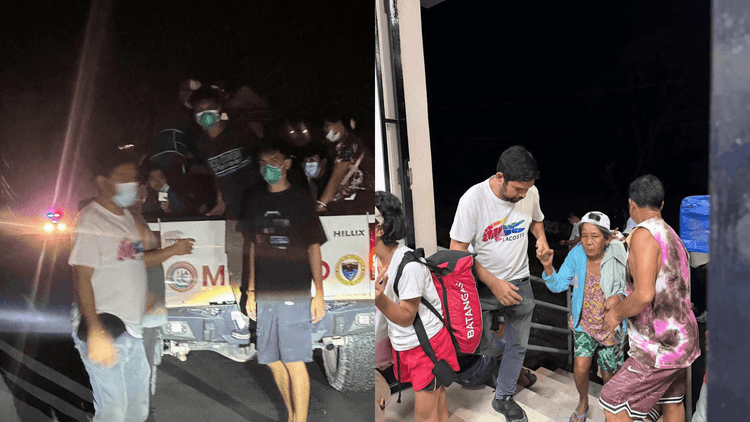
In Panama City, thousands of office workers evacuated buildings and gathered in the streets, adding to traffic congestion as people tried to find ways home.
“They evacuated all of these buildings. Everyone is outside. Now the problem is, how do we get home?” said Juan Sanchez, a 37-year-old employee of the economy ministry, who was waiting for a bus.
BUILDINGS DAMAGED, POWER OUTAGES REPORTED
President Raul Mulino traveled to Penonome, a city located between the earthquake’s epicenter and the capital, where some buildings reportedly collapsed and a church sustained damage.
Authorities also reported impacts in Chitre, the capital of Herrera province, and along the coast in Los Santos province. Residents in southern Panama described damaged homes and expressed fears that weakened structures could collapse.
“We’re scared. It’s just the two of us old folks here. The house has cracked, and we’re afraid it could fall on us,” said Ricardo Brown, 74, who lives in Herrera province.
Electricity provider Naturgy reported power outages in six provinces.
The USGS estimated that approximately 43,000 people in Panama lived in areas exposed to severe shaking. Its preliminary assessment also indicated that economic losses could range from one to 10 percent of the country’s gross domestic product, although the extent of the damage remained under assessment.
PROLONGED SHAKING FELT ACROSS THE COUNTRY
Nestor Luque, director of Panama’s geosciences institute, attributed the earthquake to the Azuero-Soná Fault System, where pressure can build up and be released through seismic activity.
Luque said the seismic waves traveled throughout the country. In Panama City, he estimated that the shaking lasted about 40 seconds, although residents in other areas may have experienced longer tremors.
Sabina Rios, who was on the sixth floor of an older building in the capital, described the earthquake as unusually strong and prolonged.
“The quake felt strong and lasted a long time, the longest I’ve felt in years,” Rios said.
Strong earthquakes are relatively uncommon in Panama, and the sudden shaking left some residents visibly distressed as they evacuated buildings and homes.
Panama’s experience with the earthquake contrasted with other recent powerful tremors in the region that caused significant loss of life. No deaths or injuries had been immediately reported following Friday’s quake, though authorities continued to assess its effects.
The country was scheduled to conduct a nationwide evacuation drill the following Monday to test emergency preparedness and response procedures.