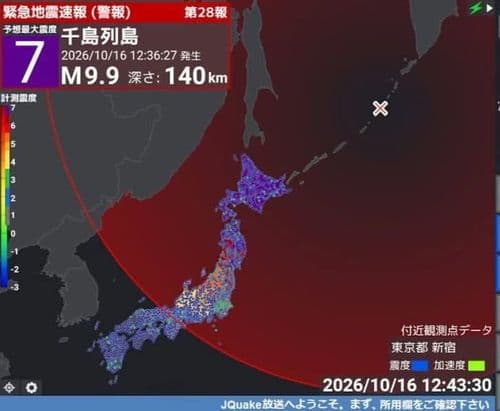
The Japan Meteorological Agency (JMA) has launched a thorough technical investigation following an unprecedented system failure on Friday, October 16, which resulted in the agency issuing and subsequently retracting an emergency warning for a magnitude 9.9 earthquake.
The nationwide alert flashed across smartphones, broadcast networks, and municipal sirens from Hokkaido to Tokyo and Tokai at 12:40 p.m. local time, warning citizens of potential maximum intensity *Shindo* 7 ground motion.
The emergency triggered an automatic 15-minute shutdown of the Tokaido Shinkansen bullet train line before the agency issued a full retraction at 12:48 p.m.
According to the Japan Times, it marked the first time the JMA has ever canceled a public emergency earthquake warning.
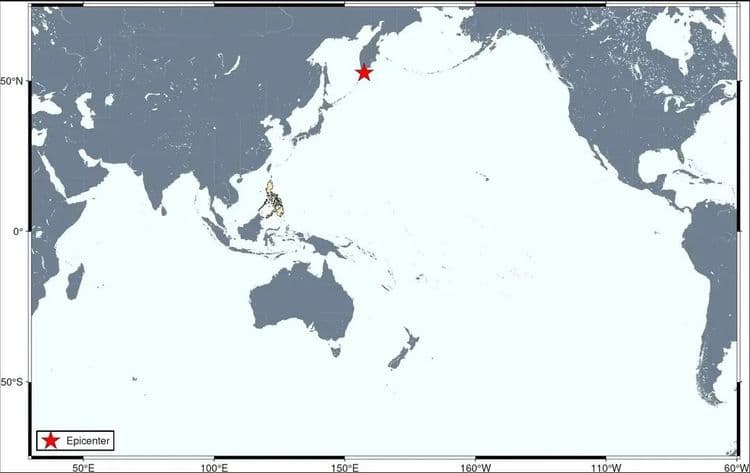
In a subsequent press briefing, JMA officials confirmed that the actual seismic event was a magnitude 6.9 earthquake located near Russia’s Kamchatka Peninsula at a depth of roughly 140 kilometers. The distant tremor registered only a minor Shindo 1 in southern Hokkaido and created no tsunami threat.
Addressing initial public concerns and speculation noted by the New York Times, JMA official Ayataka Ebita categorically ruled out external cyber interference.
Officials explained that automated observation systems miscalculated the epicenter location and mistakenly processed the deep, teleseismic waves using an algorithm designed strictly for near-field domestic quakes.
While the agency offered a public apology and pledged to overhaul its algorithmic filters to prevent distant seismic activity from triggering future phantom warnings, the sheer scale of the false alert startled residents across the country.
A 9.9-magnitude measurement has never been recorded in history—the strongest earthquake ever documented was a 9.5 in Biobío, Chile, in 1960.