
Taiwan’s Defence Minister Wellington Koo said Tuesday he has not heard that a potential $14 billion U.S. arms sale will be broken into smaller tranches, even as the package remains on hold amid U.S.–China diplomacy.
President Donald Trump has kept the new package in abeyance after meetings with Chinese President Xi Jinping, calling it a “very good negotiating chip” as Washington maintains a fragile trade truce with Beijing.
An $11 billion arms sale was approved in December, but the second, larger package—reportedly focused on air-defence systems, missiles and counter-drone capabilities—has been stalled for months.
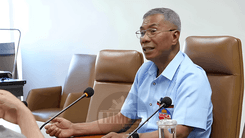
Speaking in Taiwan’s legislature, Koo said the United States has repeatedly reaffirmed that its commitment to helping Taiwan strengthen its self-defence capabilities has not changed.
“Regarding arms sales, we respect the U.S. review process. We are also continuing to coordinate with the United States. At present, we have not received any information about so-called separate batches,” Koo said.
A U.S. State Department spokesperson declined to comment on pending arms sales but said the administration has been clear that “the enduring U.S. commitment to Taiwan continues,” pointing to the December notification as evidence.
The U.S. is bound by law to provide Taiwan with the means to defend itself and remains Taipei’s most important international backer, despite the absence of formal diplomatic ties.
Koo added that Taiwan and the U.S. “do indeed have close exchanges in the military and defence spheres,” which he said would support current war-preparedness efforts and the transformation of Taiwan’s armed forces.
The comments come as Taiwanese Foreign Minister Lin Chia-lung and former President Tsai Ing-wen are in the U.S., with Tsai making her first trip to Washington since stepping down two years ago.
A State Department spokesperson said the U.S. and the international community benefit from engagement with Taiwan given its tech prowess and status as a vibrant democracy.
The Chinese embassy in Washington reiterated that it “firmly opposes official interactions of any form between China’s Taiwan region and the U.S.”