
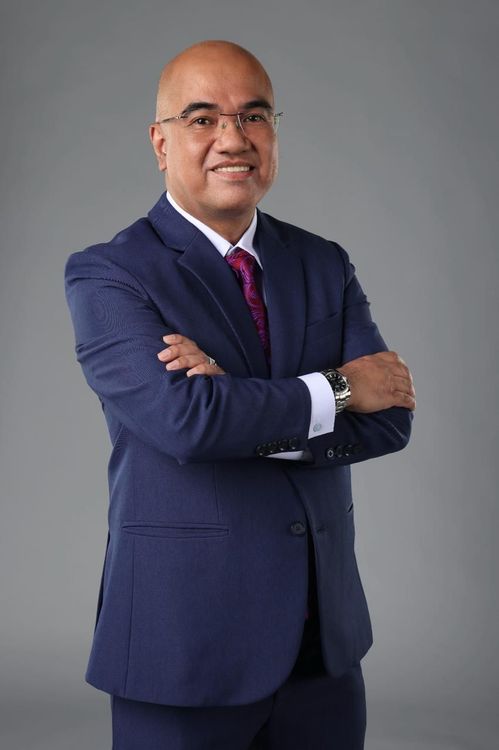
Kita niyo naman, bald ako. Kilay lang ang makapal na hindi ko pa naitataas para maihayag ang ekspresyon ko. Kaya dito ko na lang isusulat ang nararamdaman ko sa aking pagbabasa sa nangyayari ngayon sa EDSA.
Before anything else: I am not a lawyer, and I will never be one. Wala akong diploma sa batas. So on the strict legal questions, whether a P75-million campaign donation can be recharacterized as plunder, whether the timing of a non-bailable charge against a sitting senator investigating a multibillion-peso corruption scandal is coincidence or strategy, I am calling on the people who actually trained for it: international lawyers, human rights advocates, constitutional scholars, and yes, our own justices, to look at this closely and rule on it fairly.
And I am calling on local and international media, hindi lang tayo dito sa Pilipinas, kundi pati na rin ang mga sumusubaybay sa labas ng bansa, to cover this with the same rigor they would give any story about power investigating the very people who dare to expose it.
Dahil sa tingin ko, hindi lang ito kuwento ng Pilipinas. This might be a case for the whole world to see, not just the Philippines, but every government that claims to operate under the rule of law. If a lawmaker can be threatened with a non-bailable charge for exposing corruption, and the world simply looks away, that is a template other governments, anywhere, can copy. That is exactly why I am renewing this call, with emphasis: international lawyers, human rights bodies, local and international media, please pay attention. Panoorin ninyo ito. Suriin ninyo ito. The whole world should be watching this one closely.
Because here is what I am not disqualified from doing: sensing motive, sensing intention. I have spent a career behind the scenes and in front of cameras and in boardrooms, reading pitches, sales and marketing presentations, and people who say one thing while clearly meaning another: Hindi sa batas, kundi sa tao. Ngunit kung tutuusin, mas madalas na ginagamit ang batas hindi para maghatid ng katarungan, kundi para itago ang kawalan nito.
Ang nangyayari sa EDSA
For two days now, June 30 and July 1, 2026, thousands of Filipinos have filled EDSA near the People Power Monument and White Plains Avenue in Quezon City, and at the Liwasang Bonifacio in Manila. Police estimated the crowd at around 15,000 on the first night alone, with the second day expected to draw even more.
The rally concerns Senator Rodante Marcoleta, who chaired the Senate Blue Ribbon Committee investigating the largest corruption scandal in the country’s recent history, the flood-control anomalies, before the committee’s leadership changed hands. Now the Office of the Ombudsman has moved to file a non-bailable plunder case against him, tied to P75 million in campaign contributions he received in January 2025.
Strip away the traffic and the politics for a moment, and what is left is a question older than EDSA, older than the Philippines itself: what happens when the law becomes a tool instead of a shield? When the accusation seems to arrive not before the wrongdoing is exposed, but right after, aimed not at the ones exposed, but at the one doing the exposing?
Si Dr. King, at ang kaniyang Liham Mula sa Bilangguan
Advertisement
Which brings me to a man who never set foot on EDSA but who understood this exact machinery better than almost anyone in modern history: Dr. Martin Luther King Jr., the central figure of the U.S. civil rights movement in the 1950s and 1960s, awarded the Nobel Peace Prize in 1964 for his non-violent activism.
On April 16, 1963, writing from a jail cell in Alabama (arrested, notably, for marching without a permit), King answered a group of clergymen who had called him an “outsider” for involving himself in a fight they said wasn’t his. His answer became one of the most quoted lines in the English language:
“Injustice anywhere is a threat to justice everywhere. We are caught in an inescapable network of mutuality, tied in a single garment of destiny.” (Letter from Birmingham Jail, April 16, 1963)
Walang Pilipino na dayuhan sa laban ng kapwa Pilipino para sa katarungan. Hindi tayo dapat manahimik dahil lang hindi tayo direktang apektado. Iyon mismo ang diwa ng linyang iyon.
But the letter offers something even more precise for this moment than that one famous line. King drew a distinction, a legal and a moral one, between just and unjust laws:
“An unjust law is a code that a numerical or power majority group compels a minority group to obey but does not make binding on itself. … One has not only a legal but a moral responsibility to obey just laws. Conversely, one has a moral responsibility to disobey unjust laws.”
King was not arguing against the law. He was arguing against the weaponization of law, against legality used as camouflage for injustice rather than as its instrument. That, at its core, is exactly the INC’s statement on EDSA this week: hindi kami tutol sa batas, tutol kami sa pagbaluktot nito. Not in opposition to the law. Opposition to the law twisted into a weapon.
Ano ang Dapat Nating Gawin
Senator Marcoleta has a show on NET25, but I don’t know him by heart. I don’t know the Ombudsman’s either. Wala akong X-ray machine para sa motibo, at hindi rin ako hukom. What I know is that timing matters, that patterns matter, and that when the person exposing a scandal suddenly becomes the one facing prison before the people he exposed do, ordinary Filipinos are right to ask why. Kahit hindi sila abogado. Kahit ako.
So again, my call, at the close as it was at the start, but louder this time: to the international human rights community, to legal scholars here and abroad, to our own justices who will eventually have to rule on this, and especially to local and international media covering this story: look closely. Examine the timeline. Examine the motive. Sundan ninyo ang kwento, sundan ninyo ang isinisigaw ngayon sa EDSA. This is not a story for the Philippines alone to watch quietly. Filipinos deserve a justice system that is blind, not selective; one that does not simply follow whoever happens to be holding the microphone that week; and the world deserves a press, local and foreign, and a body of international lawyers, willing to ask the harder question of why.
Bald ako, wala akong maitatago. Kitang-kita ang peklat sa ulo. Sana, ganito rin ang katarungan natin: walang maitatago, walang pinipiling puntiryahin. Injustice anywhere, sabi ni Dr. King, ay banta sa katarungan kahit saan. Kahit doon sa EDSA. Kahit saan tayo nakatayo.
Mamaya, pupunta ako. Madali ninyong makikita. Makintab ang ulo.
That is the bald truth here.


Reader comments
Comments are closed for this article.
No comments yet.