Cyber Bayanihan: Why Digital Safety Should Be Every Filipino’s Daily Habit
As the Philippines continues to expand digital services, online payments, mobile apps, remote work, and AI-powered tools, cybersecurity is becoming less of a technical issue and more of a daily public concern.
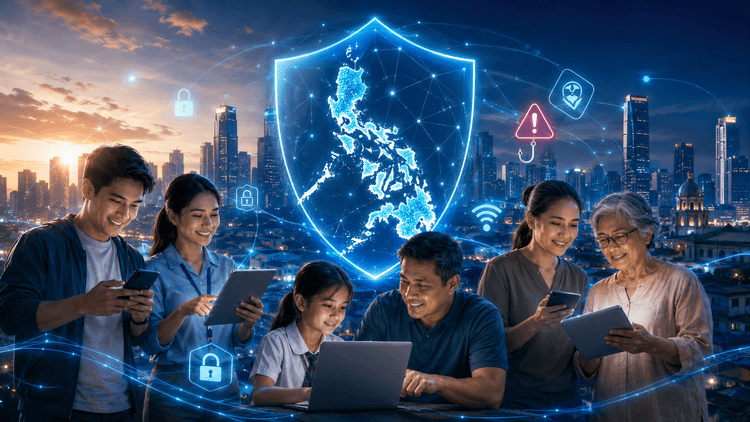
This is why the idea of “Cyber Bayanihan” is timely. In the same way that bayanihan traditionally means helping one another as a community, digital bayanihan reminds Filipinos that online safety is a shared responsibility. Government can improve systems. Companies can strengthen platforms. Schools can teach digital literacy. But every user also has a role to play.
For many Filipinos, the internet is now part of ordinary life. It is where people send money, receive government updates, talk to family abroad, apply for jobs, attend classes, buy products, watch livestreams, and read the news. But the same digital convenience also creates new risks. A fake message can lead to a stolen account. A weak password can expose private information. A suspicious link can compromise a device. A misleading post can spread faster than a correction.
Cybersecurity should therefore be explained in simple, practical terms. It is not only about firewalls, encryption, or technical systems. It is also about daily habits: checking before clicking, using stronger passwords, enabling two-step verification, updating apps, avoiding suspicious downloads, and confirming information before sharing it.
This is especially important as artificial intelligence becomes more common. AI can help improve services, research, healthcare, education, and productivity. Filipino researchers are already exploring AI in areas such as nutrition assessment, disease detection, and clinical decision support. These are promising developments. But AI can also be used to create more convincing scams, fake images, fake voices, and misleading content.
That means digital literacy must evolve. Filipinos should not only ask, “Is this message real?” They should also ask, “Who sent it? Why am I receiving it? Is it asking me to act quickly? Is it asking for money, passwords, verification codes, or personal information?”
The public should also remember that urgency is often a warning sign. Many scams pressure victims to respond immediately. They may claim that an account will be closed, a delivery is on hold, a prize is waiting, or a loved one is in trouble. Before reacting, users should pause, verify through official channels, and never share one-time passwords or sensitive personal details.
News organizations also have a role in Cyber Bayanihan. Media can help translate complex technology issues into language that ordinary families understand. Instead of treating cybersecurity as a niche topic, it should be covered as consumer protection, family protection, financial protection, and public service.
Digital transformation will continue to shape the Philippines. More services will move online. More work will depend on digital tools. More people will use AI, cloud services, e-wallets, and mobile platforms. The challenge is making sure that progress does not leave people vulnerable.
Cyber Bayanihan starts with a simple idea: a safer digital Philippines is built not only by experts, but by informed citizens. Every careful click, every verified message, every protected account, and every shared warning can help protect the wider community.