

“Clean the house. We have guests.”
We know the drill. Clutter disappears. The good plates come out. Repairs that could wait for months suddenly acquire a deadline.
What the family has learned to endure must never embarrass us before visitors.
There is something painfully familiar about Manila’s preparations for the 49th ASEAN Summit.
Streets are being cleaned. Routes are being secured. Reproductions of Filipino masterpieces line sections of Diokno Boulevard and Buendia Avenue, screening what have been described as “eyesores” before the delegates arrive.
It is an impressive display of bureaucratic muscle.
It is also an uncomfortable demonstration of whose discomfort commands attention.
The insult is not that we make an effort for visitors. We should. It is that a foreign leader’s arrival creates a deadline, while a Filipino’s daily suffering so often produces another referral.
The money is no small matter. The 2025 budget set aside ₱5.4 billion for ASEAN 2026 preparations; the 2026 budget added ₱17.496 billion for summits and related meetings. Nearly ₱23 billion across two years. These are allocations for the wider hosting program, not proof that the money has all been spent on this November summit.
With that much public money and government muscle committed, Filipinos are entitled to ask what will still work when the guests leave.
We know the explanations for everyday neglect. Overlapping jurisdictions. Limited resources. Inter-agency coordination. Matters for further study.
These are real constraints. They can also become remarkably comfortable hiding places.
A summit makes hiding harder. There is a fixed date, a route that must be ready, and officials who must answer if preparations fail. The failure will be visible to an audience the government cannot afford to disappoint.
Where is that discipline when the audience is merely Filipino?
When a sidewalk stays obstructed or a drain repeatedly overflows, name the office responsible. Set a date. Make someone answer if the work is not done.
“Referred to the appropriate office” tells us where the complaint went. It does not tell us when the suffering ends.
Nobody seriously expects chronic traffic or urban poverty to disappear overnight. A cleared convoy route is not a repaired transport system. Extraordinary security arrangements cannot become the daily operating plan for an entire metropolis.
But assigning responsibility is not an extraordinary security measure.
Neither is keeping a deadline.
Filipinos should not need a visiting head of state to obtain either.
Advertisement
Consider the daily emergency that traffic has become. TomTom’s 2025 Manila city data recorded an average 31 minutes and 45 seconds for a 10-kilometer drive. Its rush-hour benchmark estimated 143 hours lost to congestion over the year. Those are driving measures, not a survey of every commuter’s experience.
Yet time lost so routinely becomes background noise. Leave earlier. Get home later. Rearrange your life around a failure you cannot repair.
For the summit, Malacañang declared November 16 to 18 special non-working days in NCR to ease congestion and secure participants.
For three days, fewer people on the roads may help the delegates move. On Thursday, commuters will return to those roads. A holiday cannot be the city’s traffic plan.
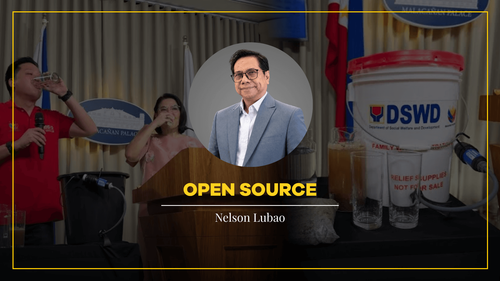
The same urgency should protect those ordered to make room. In Pasay, vendors and establishments have faced temporary closures around summit venues. A November 12 government radio report described DSWD’s distribution of ₱10,000 each and food packs to a batch of 54 affected vendors and individuals. Assistance was continuing.
The help matters. But a food pack should not end the discussion about why a worker needed one.
The test is whether officials identified the workers before the closures, had support ready when earnings stopped, and will account for those still waiting.
A security plan can anticipate a delegate’s route down to the minute. It should also anticipate that a vendor needs to eat that day.
National dignity includes both.
And the masterpieces? Celebrate Filipino art. Let visitors see it.
But sweeping poverty behind a canvas barrier does not eradicate it. A beautiful reproduction cannot repair the conditions it screens.
The photograph cannot tell us what was fixed, what was merely screened, or who will be responsible after the panels come down.
We should examine our own standards, too.
Would we praise a landlord who repaired a leak only when a prospective tenant arrived, then left the family paying rent to live with the drip? Why accept that standard from government?
We recognize selective care immediately when we are the ones being neglected. National pride should sharpen that judgment, not suspend it.
Welcome the delegates. Protect them properly. Show the world what the Philippines can do.
Then make the deadlines, coordination and accountability work beyond the ceremonial routes. Publish what was spent, what was improved and who will maintain it.
The agencies have shown they can coordinate around a deadline.
“Clean the house. We have guests.”

Reader comments
Comments are closed for this article.
No comments yet.